
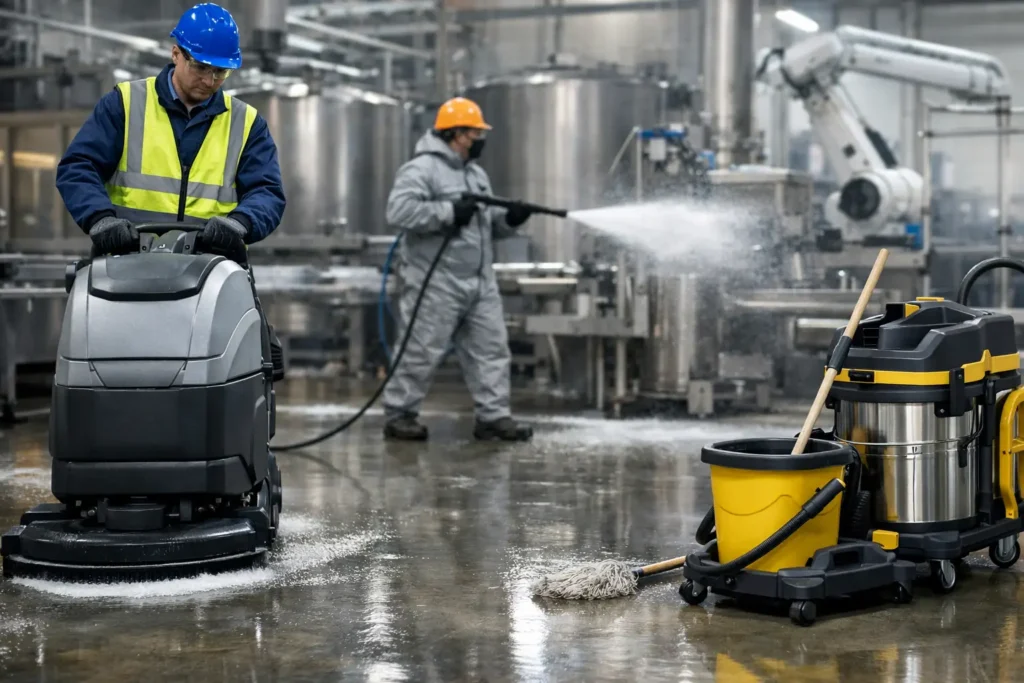
A warehouse floor that looks only slightly dusty can still create real problems – product contamination, slip risks, equipment wear, and a poor impression on staff, visitors, or auditors. That is why industrial cleaning solutions matter far beyond appearance. In active commercial and industrial spaces, cleaning supports safety, workflow, asset protection, and day-to-day reliability.
For facility managers, business owners, and site supervisors, the challenge is rarely whether cleaning is needed. The real question is what kind of cleaning setup fits the space, the traffic, the material being handled, and the level of risk involved. A factory, warehouse, loading area, food prep zone, or large back-of-house operation will not all need the same approach, and treating them the same usually leads to missed details or wasted effort.
What industrial cleaning solutions actually cover
Industrial cleaning solutions are not one single service. They refer to a practical mix of methods, tools, staffing, and schedules used to keep demanding work environments clean and operational. That can include floor scrubbing, dust removal, washroom sanitation, break room cleaning, high-touch surface disinfection, waste handling, and targeted deep cleaning for buildup in hard-working areas.
In some facilities, the priority is constant debris control. In others, it is grease, fine dust, packaging waste, spill response, or keeping staff amenities clean and usable. The point is to match the cleaning plan to the site itself, rather than applying a generic checklist.
This is where many businesses lose time. They ask for a standard clean when what they actually need is a site-specific service plan. A showroom attached to a warehouse needs a different finish than a storage zone. A dispatch area has different pressure points than an office. Even within the same building, the right cleaning standard can vary by room, traffic level, and use.
Why the right industrial cleaning solutions matter
Cleanliness in an industrial setting is tied to more than presentation. It affects how safely people move through the site, how long surfaces and equipment stay in good condition, and how easy it is to maintain a professional standard across the business.
Dust and residue can build up slowly enough that teams stop noticing it. Forklift routes become grimy, corners collect waste, and shared areas lose hygiene standards over time. None of that usually causes one dramatic failure. Instead, it creates small daily issues that add up – more mess tracked through the building, harder floor maintenance, avoidable wear, and a workplace that feels less controlled than it should.
For businesses with clients, contractors, or inspectors coming on site, that also affects confidence. A clean, well-maintained facility signals that the operation is organized and managed properly. That matters in logistics, manufacturing support spaces, retail storage areas, medical-adjacent environments, and any business where standards are visible.
How to assess what your site really needs
The best cleaning plan starts with a realistic view of the environment. Not every industrial site needs daily deep cleaning, and not every site can get by with a basic after-hours tidy. The right level depends on the type of activity, the amount of foot and vehicle traffic, and the kind of residue created during normal operations.
Traffic and usage patterns
High-traffic zones need more frequent attention than low-use sections. Entry points, loading bays, staff kitchens, restrooms, and shared walkways usually carry the most visible dirt and the highest hygiene demands. If these areas are allowed to slide, the whole site feels less maintained, even if the back areas are in acceptable condition.
Surface type and soil type
Concrete floors, sealed floors, tiles, glass, stainless steel, carpeted offices, and upholstered reception furniture all behave differently. Dry dust, greasy residue, mud, packaging scraps, and food waste also require different methods. Good industrial cleaning solutions take both surface and soil into account so the result is effective without being harsh or inefficient.
Compliance and presentation needs
Some sites need cleaning mainly for operational safety. Others also need to maintain presentation for customers, staff, or external visitors. If your facility includes office areas, reception zones, lunchrooms, or client-facing spaces, the standard has to be broader than simple debris removal.
A practical approach to industrial cleaning solutions
The most effective setup is usually structured, not excessive. That means dividing cleaning into routine work, scheduled detail cleaning, and occasional deep cleaning based on need.
Routine cleaning handles the daily or several-times-weekly basics that keep the site under control. This may include floor care in active zones, restroom cleaning, kitchen and break area sanitation, trash removal, and wiping high-touch surfaces. These tasks protect the baseline condition of the building.
Scheduled detail cleaning focuses on the areas that are easy to ignore when operations are busy. Corners, edges, under fixtures, interior glass, partitions, skirting, vents, and low-level buildup often fall into this category. They may not seem urgent on a single day, but over time they shape whether a facility feels properly maintained.
Deep cleaning comes in when routine work is no longer enough. That could be after heavy operational periods, before inspections, after fit-outs, following construction-related dust, or when grime has built up beyond normal maintenance levels. Deep cleaning is not a replacement for routine service. It works best as a reset or targeted intervention.
Equipment and products make a difference
The quality of industrial cleaning solutions depends heavily on using the right equipment for the site. Large floor areas often need professional-grade machines to clean efficiently and consistently. Smaller detail zones may need manual techniques and close attention. The best result usually comes from combining both, rather than relying on one method for everything.
Products matter too, but more is not always better. The goal is to use suitable, professional cleaning products that align with the environment, the surfaces being cleaned, and the business’s safety expectations. In many workplaces, eco-friendly product choices are also part of the decision, especially where staff spend long hours on site or where there is regular public access.
A practical cleaning provider will not treat every problem as a chemical problem. Often, the bigger issue is poor frequency, the wrong tools, or a cleaning scope that does not match the way the space is used.
When a standard office clean is not enough
Many commercial properties include mixed-use spaces, and this is where cleaning scopes often get blurred. An office attached to a warehouse or production area may have front-of-house needs in one section and industrial-level dirt control in another. If the service plan only reflects the office side, the operational areas are left behind.
The reverse can happen as well. A site may be cleaned mainly for operational function while reception areas, meeting rooms, windows, or staff amenities do not receive enough attention. That can affect employee experience and the way visitors judge the business.
This is why flexibility matters. A useful provider looks at the whole property and builds a service around the zones that matter most. For businesses across Sydney, especially in busy industrial and commercial corridors where sites range from compact units to large warehouses, that tailored approach tends to work better than a one-size-fits-all schedule.
Choosing a provider for industrial cleaning solutions
Trust matters in any cleaning service, but it matters more in industrial settings where access, safety, timing, and consistency all affect operations. You want a team that shows up reliably, understands commercial environments, and works with a clear scope.
It also helps to look for trained staff, insured service, professional equipment, and straightforward communication. Those basics reduce friction and make it easier to maintain standards over time. If a provider can handle both routine cleaning and specialist work such as warehouse, factory, office, or post-construction cleaning, that creates continuity when your needs change.
A good cleaning relationship is usually built on responsiveness and clarity. You should know what is included, how often it is done, and what happens when the site needs extra attention. Businesses do not need vague promises. They need dependable service that fits the way the site actually runs.
Mega Cleaning Services works with businesses that need that kind of practical support – cleaning that is organized, professional, and suited to the property rather than forced into a generic package.
Common mistakes businesses make
One common mistake is setting the cleaning schedule too lightly and then expecting spotless results in high-use areas. Another is over-servicing low-priority zones while neglecting the parts of the building that affect safety, hygiene, or first impressions most.
There is also a tendency to wait until the site looks bad before adjusting the plan. That usually costs more time and creates more disruption than maintaining a steady standard from the start. In industrial environments, prevention is usually simpler than recovery.
The most effective industrial cleaning solutions are not necessarily the most complicated. They are the ones that reflect the site, the workload, and the standard the business needs to maintain every week, not just when someone important is walking through the door.
If your facility feels harder to keep under control than it should, that is usually a sign the cleaning plan needs to be better matched to the space. The right setup brings order back quickly, and once that standard is in place, everything else runs a little smoother.
Need a Hand With the Cleaning?
Book online in 2 minutes with instant, GST‑inclusive prices. New customers get 10% off their first clean.