
Post-construction cleaning Sydney: what builders often overlook
A site can look finished and still be nowhere near handover-ready. Fresh paint is on the walls, the joinery is in, the floors are down, and everyone wants the keys handed over. Then the light hits the glass, the concrete dust settles again, and the client starts noticing the details.
That is where post-construction cleaning often gets underestimated. Builders usually focus on defects, programme pressure and final trades. Fair enough. But the clean is not a last-minute cosmetic job. It affects presentation, safety, surface performance and the first impression a homeowner, tenant or commercial client takes from the project.
In Sydney, where many builds and renovations move quickly and multiple trades overlap right to the end, the missed details are usually the same. Fine dust, adhesive residue, grout haze, dirty tracks in new coatings, and surfaces cleaned with the wrong method. A rushed clean can create more problems than it solves.
Why the final clean matters more than most builders expect
A proper post-construction clean does two jobs at once. It makes the property presentable, but it also protects the work that has just been completed. New epoxy, polished concrete, tile finishes, stainless steel, powder-coated frames and painted skirtings can all be marked, dulled or stained by incorrect cleaning.
This is especially relevant after floor preparation and coating work. Concrete grinding dust travels further than most people realise if the site is not controlled properly. Even when dust-controlled equipment is used, residue from other trades still lands on horizontal surfaces, inside tracks, around vents and along edges. If that material is left behind, it gets walked through the property and can scratch finishes or keep reappearing after handover.
Clients may not know the technical cause, but they do notice the result. If a newly completed home or shop still feels dusty, streaky or rough underfoot, confidence in the whole job drops.
The biggest oversight is treating all dust the same
Builders often assume dust is just a vacuum-and-wipe problem. On real sites, it is more complicated than that.
Construction dust is layered. There is plaster dust, sawdust, silica-containing residue from concrete and masonry work, paint overspray, packaging debris and general site dirt. Each behaves differently. Some lifts easily. Some smears when wet. Some settles again for days if the clean starts before the site is truly ready.
That is why timing matters. If cleaning begins while sanding, siliconing, drilling or touch-up painting is still happening, the result rarely holds. The site may look cleaner for a few hours, but dust continues to circulate and settle. A better approach is staged cleaning – rough clean first, detail clean once trades are finished, and final presentation clean just before handover if needed.
For homes in Western Sydney and other fast-moving renovation areas, this staged approach often saves money in the long run because it reduces recleaning and avoids damage caused by trades walking back through freshly cleaned areas.
Floors are where shortcuts show up fastest
New floors carry the visual weight of the whole property. If they are dirty, scuffed or hazy, the entire job feels incomplete.
This is one area where builders often rely on generic cleaning methods that do not suit the surface. A newly coated epoxy floor should not be treated the same way as bare concrete, tile, vinyl or timber-look boards. Harsh chemicals, abrasive pads and dirty mop water can leave marks, reduce sheen or interfere with curing if the clean happens too early.
Concrete surfaces have their own risks. After grinding or skim-coat repairs, leftover residue around edges, control joints and corners is common. It does not take much for that dust to transfer onto adjoining finishes. On tiled floors, grout haze is another frequent issue. It can be subtle at first, then obvious in natural light.
Good post-construction cleaning protects the floor rather than simply making it look passable. That means using the right equipment, the right chemistry and enough care around edges, thresholds and transitions.
Glass, frames and tracks are nearly always underestimated
If you want to spot a rushed final clean, look at the windows. Not just the glass – the frames, tracks, stickers, silicone smears and powdery buildup in corners.
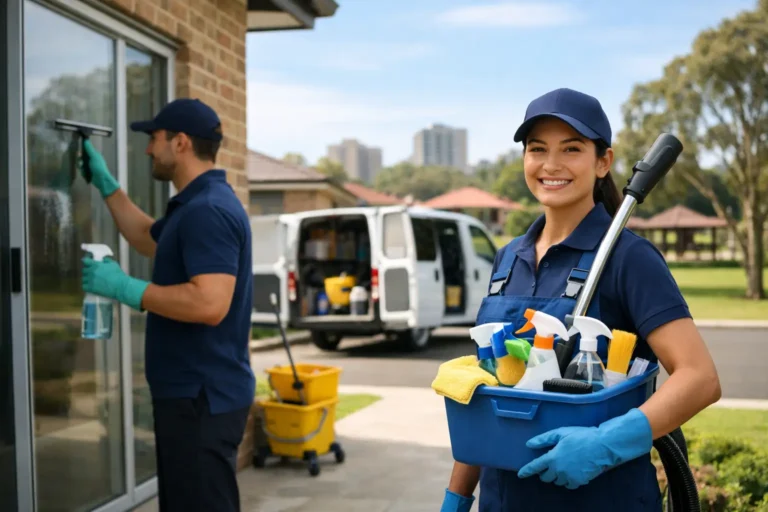
Window cleaning after construction is detailed work. Labels and protective films need proper removal. Dust collects deep in tracks. Paint specks and render residue can become permanent if handled carelessly. Metal frames can also be scratched by aggressive scraping.
Builders sometimes leave this until the very end and expect a quick once-over to do the job. That usually leaves behind enough residue for the client to notice straight away. In residential handovers especially, clean glass changes how the whole property feels. More light, better presentation, fewer complaints.
The same applies to mirrors, shower screens and splashbacks. They attract residue quickly and show every smear.
Adhesives, silicone and protective film leftovers
Another common oversight is small residue that reads as poor workmanship even when the installation itself is solid.
Protective films left on appliances, tape marks on skirtings, silicone smudges near vanities, sticker glue on glass and adhesive lines on cabinetry all make the job feel unfinished. These are not major defects, but they are exactly the kind of detail clients fixate on during handover.
The challenge is that residue removal needs care. Use the wrong solvent and you can damage laminate, discolour paint or dull coated surfaces. That is why post-construction cleaning should not be treated as basic domestic cleaning with a few extra cloths. It requires product knowledge, surface awareness and attention to detail.
Bathrooms and kitchens need more than a wipe-down
Wet areas collect the heaviest mix of residue – grout haze, silicone marks, plaster dust, packaging fibres, fingerprints, tapware spots and joinery dust.
In kitchens, builders often focus on benchtops and fronts but overlook the tops of cupboards, internal drawers, kickboard lines and rangehood surfaces. In bathrooms, it is usually the tile edges, behind the toilet, shower channels and fittings that miss out. These spots are small, but they shape the client’s sense of cleanliness.
There is also a hygiene factor. Construction mess is not just untidy. It can include fine particulates and residues that should be fully removed before a family moves in or staff begin operating from the space.
Handover presentation is part of the build quality
A final clean is often judged as a separate service, but clients rarely see it that way. To them, it is part of the overall standard of the build.
If the property smells dusty, has smears on the windows, powder in the corners and debris in the garage, the finish feels less professional. On the other hand, a properly cleaned site makes every trade look better. Paint lines appear sharper. Joinery looks crisper. Flooring shows as intended.
This matters for landlords, property managers and commercial operators as much as homeowners. A clean, ready-to-use site reduces delays between completion and occupancy. It also helps avoid disputes over whether something is defective or simply dirty.
What a builder should check before calling the job finished
The smartest builders do not ask, “Has it been cleaned?” They ask, “Is it handover clean?”
That means checking whether dust has been removed from ledges, tracks, vents and tops of doors. It means looking at floors in angled light, inspecting bathrooms for grout haze, and checking whether residue is still on frames, fittings and cabinetry. It also means confirming that the cleaning method matched the installed surface.
For projects involving concrete grinding, floor coatings or epoxy systems, this is even more important. Surface damage caused during the clean is avoidable, but only if the cleaner understands what has been installed and what products are safe to use.
The best results come from coordination, not guesswork
Post-construction cleaning works best when it is treated as part of the delivery plan, not an afterthought once the skip bin leaves.
That means sequencing trades properly, allowing enough time before handover, and making sure cleaners know which areas are sensitive or still curing. A rushed clean at the end of a long programme often leads to missed detail, rework and unnecessary friction with the client.
For renovators, landlords and businesses preparing a property for occupation, it is worth working with teams that understand both surface care and presentation standards. If the project includes flooring preparation or specialist coatings, coordination matters even more. A workmanship-driven contractor will usually tell you the safest cleaning window and what to avoid on fresh surfaces.
If you need that kind of practical guidance, Floor Masters can help point you in the right direction during the flooring stage, and for broader cleaning support across the same service area, Mega Cleaning Services at https://megacleaning.com.au/ is a relevant local option.
The job does not feel complete when the tools are packed away. It feels complete when the property is clean, safe to walk through, and ready to be used without the client finding the problems everyone else walked past.