
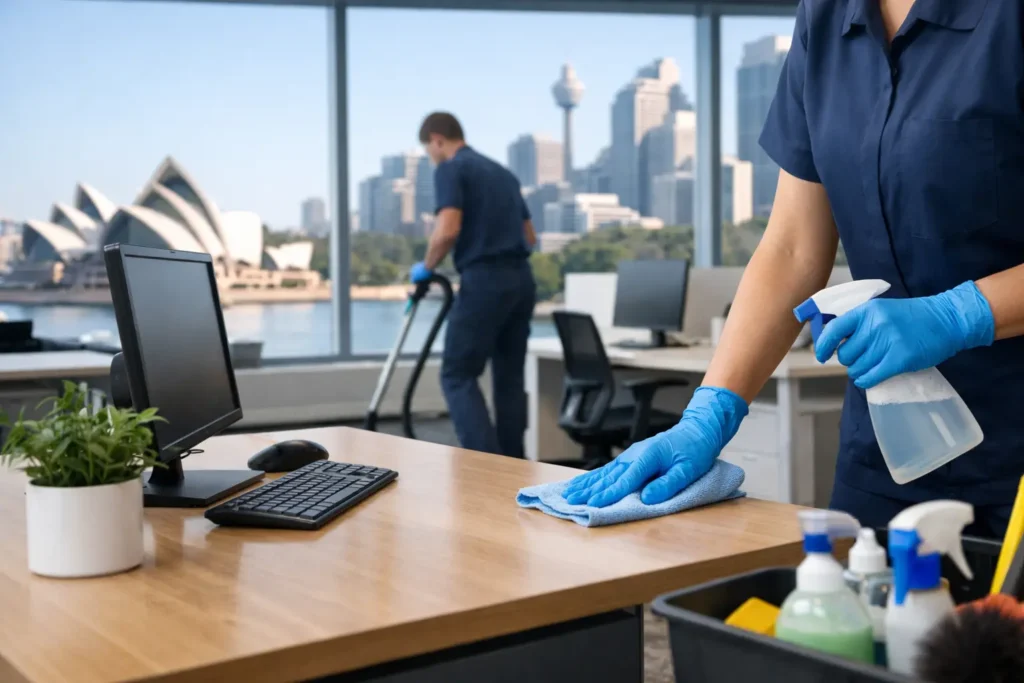
If your office kitchen smells off by Wednesday, the bathrooms never quite feel fresh, or the entry starts looking tired before the week is out, your cleaning schedule is probably wrong. The real question is not just how often should your Sydney office be cleaned, but how often each part of the space needs attention to stay presentable, safe and easy to maintain.
For most Sydney offices, there is no one-size-fits-all answer. A small professional suite with six staff has very different needs from a busy showroom, medical admin office or shared workspace with constant foot traffic. The right schedule depends on how your office is used, how many people move through it each day, and what sort of flooring and surfaces you need to protect.
How often should your Sydney office be cleaned in practice?
A practical cleaning schedule usually breaks the office into zones rather than treating the whole site the same way. High-use areas need frequent cleaning because they affect hygiene, presentation and safety straight away. Low-use areas can often be cleaned less often without causing issues.
In most standard offices, kitchens, bathrooms, bins and touchpoints need daily attention. Workstations, reception areas and general vacuuming often need cleaning several times a week, if not daily in busier sites. Windows, detailed dusting, upholstery and deep floor maintenance usually sit on a weekly, monthly or quarterly cycle.
That means if you are asking how often should your Sydney office be cleaned, the honest answer is usually this: some areas daily, some weekly, and some on a planned deep-clean schedule.
The biggest factors that change your cleaning frequency
Foot traffic
The more people walking through your office, the faster dirt, moisture and wear build up. This matters even more in Sydney conditions, where wet weather can bring mud and grit inside, and dry periods can leave a fine layer of dust on hard surfaces.
Reception areas, corridors and entrances take the hit first. If these areas are not cleaned often enough, the whole office feels neglected, even if private rooms are spotless. For offices with regular visitors, clients or deliveries, daily cleaning is usually the safer choice.
Type of business
A corporate office with mostly desk-based staff can often manage with a lighter schedule than a customer-facing business. Real estate offices, medical consulting suites, retail back offices, gyms and industrial admin areas usually need more frequent cleaning because they deal with higher traffic, higher expectations or tougher dirt.
Shared offices are another category altogether. When multiple businesses use the same kitchen, toilets and meeting rooms, standards can slip quickly. In those settings, daily cleaning is rarely excessive.
Number of staff and shared spaces
More people means more mess, but the real issue is how many spaces are shared. A team of 20 with a large kitchen, two bathrooms and several meeting rooms creates more cleaning demand than a larger team spread over separate zones.
Shared fridges, microwaves, coffee stations and breakout areas need regular attention because they become hygiene risks quickly. Once smells and spills set in, the office starts feeling harder to manage.
Your flooring and surface finishes
Flooring has a major impact on how often cleaning is needed and how it should be done. Carpet holds dust and marks. Tile grout traps grime. Concrete and epoxy perform well in busy settings, but only if they are cleaned correctly and on schedule.
For businesses with coated concrete or epoxy floors, routine cleaning is less about making the floor look good for one day and more about protecting a durable finish built to last. Grit and debris act like sandpaper under foot traffic, which can shorten the life of the surface over time. If you want to understand how different finishes affect maintenance, see what epoxy flooring is and why businesses choose it.
A realistic office cleaning schedule
For most offices, daily cleaning should cover bathrooms, kitchen surfaces, rubbish removal, spot mopping, vacuuming of high-traffic areas and sanitising shared touchpoints such as door handles, light switches and meeting tables. If your office has regular client traffic, the reception area should also be reset daily.
Two to three times a week is often suitable for dusting desks, cleaning glass partitions, vacuuming quieter rooms and mopping lower-use areas. This works well in offices with moderate traffic where daily full-site cleaning is not necessary.
Weekly cleaning is a good time for more detailed attention. That may include skirting boards, internal glass, kitchen appliances, under-furniture vacuuming and a closer clean of meeting rooms and staff areas.
Monthly or quarterly deep cleaning should deal with the buildup that regular cleans miss. This can include carpet extraction, hard floor scrubbing, detailed washroom descaling and stain treatment. If your office includes workshop, warehouse or garage-style zones, floor maintenance becomes even more important. Businesses with hard-wearing surfaces often benefit from periodic machine cleaning to keep the finish performing as intended. Our guide to keeping commercial floors safer and easier to maintain explains why that matters in high-traffic environments.
Signs your office is being cleaned too little
Some problems are obvious, others creep up slowly. If staff are wiping down kitchen benches before using them, if bathroom supplies run out often, or if bins overflow before the cleaner returns, your schedule is too light.
There are also longer-term signs. Floors lose their finish faster, grout darkens, carpet edges hold dust, and marks stay visible around entry points. These are not just appearance issues. They suggest your cleaning routine is reactive rather than planned.
From a business point of view, under-cleaning usually costs more later. You end up paying for intensive recovery cleans, earlier floor replacement or repairs, and a workplace that does not present well to clients or tenants.
Can an office be cleaned too often?
Yes, but the problem is usually not frequency alone. It is poor method, wrong chemicals or unnecessary deep cleaning on the wrong surfaces.
For example, hard floors can suffer if aggressive products are used too often. Carpet can wear faster if overwet or repeatedly treated without need. Even desks and screens can be affected by harsh cleaning methods.
That is why the best approach is not simply to book the maximum number of cleans. It is to match the frequency and method to the surface, traffic level and use of the space. A good cleaner should be able to explain why each part of the office is on a particular schedule.
Why floors deserve special attention
In most offices, flooring is the first thing people notice without realising it. A clean, well-kept floor makes the whole site feel more professional. A marked, dusty or slippery floor does the opposite.
This is especially true in commercial settings with concrete, workshop-style areas, loading access or customer-facing entries. Dirt carried in from outside can create slip risks and wear down the surface fast. If your site has ageing concrete, patchy coatings or difficult-to-clean areas, the issue may not be your cleaner alone. The floor itself may need repair or resurfacing to become easier to maintain. If that sounds familiar, it helps to understand when concrete grinding and surface preparation are worth doing.
For offices planning a refit or upgrade, choosing a floor that is easy to clean can reduce maintenance pressure for years. That is one reason many Sydney businesses move towards non-slip epoxy and properly prepared concrete systems in back-of-house and heavy-use areas.
How to choose the right schedule for your office
Start with your busiest areas, not your quietest ones. If the bathrooms, kitchen and entry stay under control, the office will feel cleaner overall. Then look at the points where hygiene, presentation and wear are most likely to become problems.
It also helps to think in terms of outcomes. Do you want the office to look tidy for staff, impress clients, meet tenancy standards, reduce slip risks or protect a new floor finish? Different priorities change the schedule.
For many Sydney offices, a sensible baseline is daily attention to shared hygiene zones, plus a broader clean two to five times a week depending on traffic. From there, deep cleaning and floor maintenance can be planned monthly or quarterly.
If your current routine feels inconsistent, that is usually a sign the schedule was guessed rather than assessed. A proper cleaning plan should reflect how the space actually functions, not just what seems cheapest on paper.
A clean office is not about over-servicing. It is about keeping the space safe, presentable and easier to run day after day. When the schedule matches the traffic, the surfaces and the way your team works, everything holds up better – including the floors under it all.